

The new America First Global Health Strategy could erode years of progress under PEPFAR [Brookings] ↳
Brookings articulates how the Trump administration's America First Global Health Strategy is replacing PEPFAR's humanitarian model with bilateral compacts that tie U.S. support to unaffordable domestic spending hikes, national health data access, and mineral agreements. The shift compounds damage already done by U.S. funding disruptions.
Global hunger is rising after aid cuts. Afghans needs help. [WaPo] ↳
Afghanistan heads into winter with 14 million people facing acute hunger as donor retrenchment led by U.S. aid cuts leaves the agency $500 million short and child wasting at critical levels. This Washington Post opinion piece argues the American withdrawal from humanitarian funding has removed the donor of last resort that once kept crises like this one contained.
Child malnutrition is at record levels in Afghanistan as aid cuts deepen crisis [WaPo] ↳
Twelve Afghan provinces have reached critical levels of child malnutrition as the World Food Programme suspends food distributions due to lack of funding. The Washington Post reports that dwindling assistance since 2022 has been exacerbated by the Trump administration's sweeping foreign aid cuts.
The battle over who should run the United States' 'Food for Peace' program [NPR] ↳
After the Trump administration froze foreign aid and shuttered USAID, farm-state lawmakers revived the flagship hunger program at the Department of Agriculture. But former Food for Peace director Dina Esposito warns USDA has no humanitarian mandate or expertise and is bypassing the worst hunger hotspots, according to this NPR reporting.
Child malnutrition in Nepal has reached ‘alarming’ levels since aid cuts, survey finds [The Guardian] ↳
A government screening of over one million Nepali children found acute malnutrition rising from 6.6% to 7.8% nationally (12.3% in Madhesh Province) since USAID ended its child nutrition funding in the country roughly 14 months ago. The sudden halt of a U.S.-funded program has broken down community outreach and treatment referral systems built over decades, threatening the 72% decline in under-five death rates Nepal achieved between 1996 and 2022.
With USAID's collapse leaving nutrition bars piling up in U.S. factories, RUTF producers seek other delivery methods [NPR] ↳
With USAID once responsible for over half of annual orders of ready-to-use therapeutic food, its dismantling has left U.S. producers with orders reduced to a trickle as the Trump administration shifts toward a "humanitarian trade" model under the State Department's new, less funded Bureau of Disaster and Human Response, NPR reports.
UN food aid agency gets $800 million grant from US after funding cuts [Reuters] ↳
The WFP received an $800 million contribution from the U.S., a partial reversal after the Trump administration earlier slashed U.S. funding to the agency, even as global hunger sits at record levels, Reuters reports.
A plan to get lifesaving food to hungry kids was working well — until it wasn't [NPR] ↳
NPR reports that the Trump administration's foreign aid cuts have triggered widespread shortages of a ready-to-use therapeutic food critical for treating childhood malnutrition across more than 500 community clinics in Senegal.
Sudan crisis worsens as civil war enters 4th year and Hormuz closure disrupts aid [PBS] ↳
Aid groups report that the world's largest humanitarian crisis has been compounded by the closure of the Strait of Hormuz, which has spiked fuel and fertilizer prices and choked the flow of food and assistance, even as Secretary of State Marco Rubio concedes Washington's response remains limited to identifying aid distribution points, PBS reports.
Trump's revamped Food for Peace bypasses the countries closest to famine [CFR] ↳
The Council on Foreign Relations reports that the revamped $1.2 billion Food for Peace program moved to the USDA is now routing U.S.-grown commodities to a short, mismatched list of just seven countries — two of which don't meet an emergency threshold — while bypassing countries needing it the most.
A horrific parasite is back — and Elon Musk's DOGE could be partly to blame [HuffPost] ↳
HuffPost reports that the New World screwworm has been confirmed in south Texas for the first time in decades, roughly a year after DOGE eliminated the USAID-funded program that monitored and helped contain the parasite's northward spread. While it remains unclear whether the cuts directly enabled the outbreak, the case has raised alarm about a potentially costly crisis for the U.S. cattle industry as beef prices climb.
Caribbean food security, one year after the collapse of USAID [Forbes] ↳
One year after Trump dismantled USAID, the Caribbean is still grappling with the collapse of agricultural programs that helped smallholder farmers, built climate resilience, and strengthened food security across a region where 42% of the population is food insecure. Forbes reports that closed programs significantly reduced community resilience when Hurricane Melissa struck in 2025.
'Food security is national security,' McCain warns as WFP faces funding pressure [PBS NewsHour] ↳
As outgoing World Food Programme Executive Director Cindy McCain steps down, she warns PBS NewsHour that U.S. aid cuts, compounded by global funding reductions and the closure of the Strait of Hormuz, have left the WFP able to cover less than half of what the world needs, with more than 315 million people now facing acute hunger, more than double the 2019 figure.
Catastrophe is emerging in the world's most vulnerable places [NYT] ↳
The humanitarian relief system, decimated by the dismantling of USAID, now faces a compounding crisis as the closure of the Strait of Hormuz doubles the price of food and fuel, leaving the World Food Programme able to reach only a fraction of the nearly 2 million people a month it was serving in early 2025, according to The New York Times.
UN food agency halves Syria food aid, halts bread subsidy over funding shortages [Reuters] ↳
The World Food Programme has halved emergency food assistance in Syria, cutting aid from 1.3 million people to 650,000 as funding shortages driven in part by U.S. foreign aid cuts leave 7.2 million Syrians acutely food insecure, Reuters reports.
The Iran war's forgotten front: global food insecurity and the limits of U.S. aid [Council on Foreign Relations] ↳
The Council on Foreign Relations reports that the U.S. has spent roughly 510 times more on its war with Iran than on humanitarian aid since the conflict began, even as the WFP projects 45 million more people could face acute food insecurity.
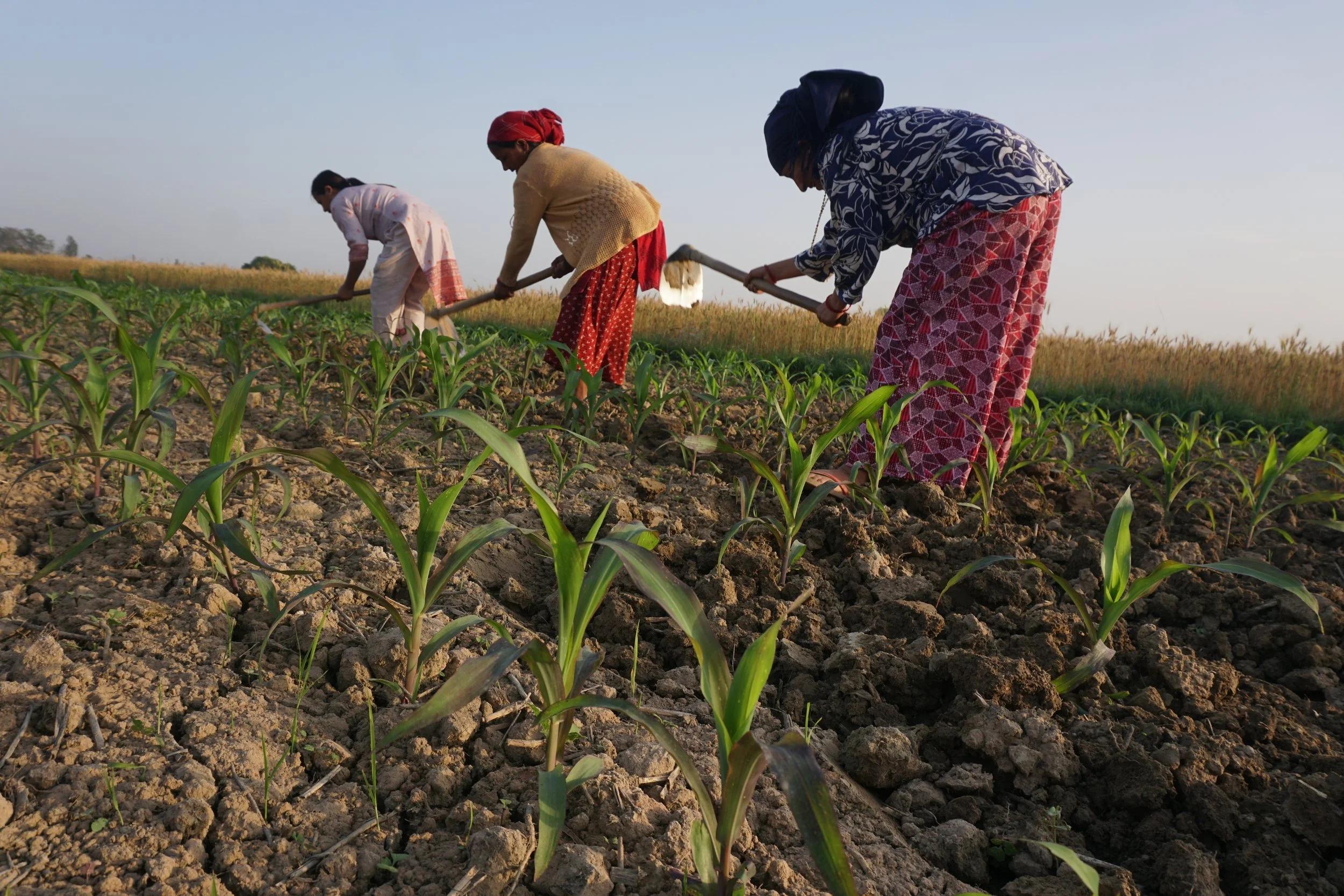
'I had no choice but to go abroad': US aid cuts hit Nepal’s farmers
In rural Nepal, women farmers once supported by Feed the Future now navigate farming without reliable seeds, markets, or guidance. For some, leaving the land is becoming the only option.
Photo Credit: Yam Kumari Kandel
People in food crisis around globe doubles as foreign aid plummets to 10-year low [The Independent] ↳
The share of the global population facing food crises or worse has doubled over the past decade to nearly 23%, with 266 million people affected, according to The Independent. The U.S. drove three-quarters of a 23% decline in foreign aid from wealthy nations in 2025 — cutting its own contributions by 57% — leaving Germany as the world's largest donor.
The world agreed to stop using food as a weapon. It hasn't. [Council on Foreign Relations] ↳
Despite a landmark 2018 U.N. Security Council resolution condemning the deliberate starvation of civilians, food continues to be weaponized with near impunity, argues David Beasley, former World Food Programme director.
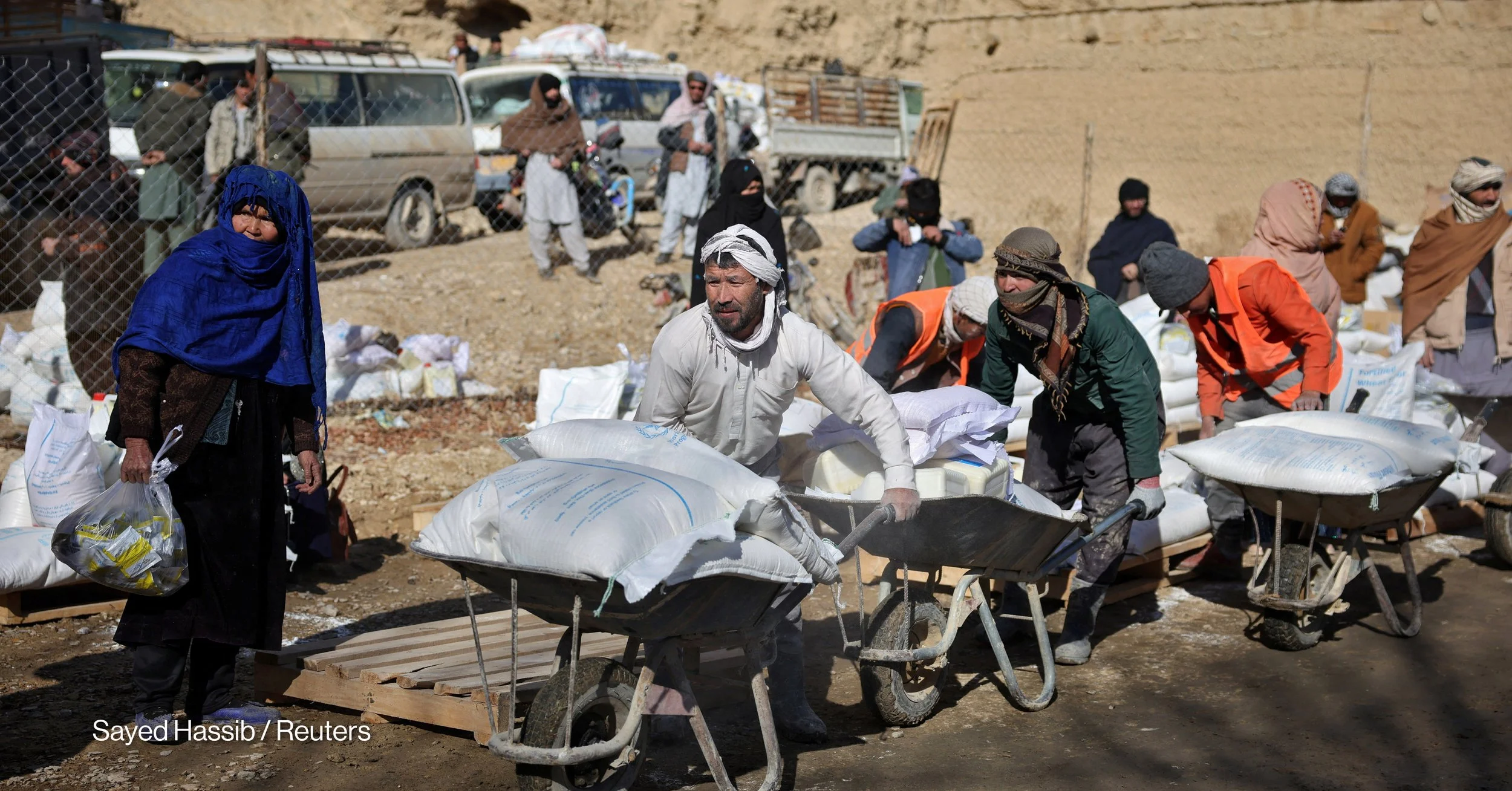
Afghans ‘desperate’ as aid cuts bring mass hunger crisis
As the snow cuts off highland communities in Afghanistan, aid workers say many won’t be alive once it melts.
Photo Credit: Sayed Hassib / Reuters