

Journalism on the line: How USAID cuts threaten global health reporting [Association of Health Care Journalists] ↳
At a Health Journalism 2026 panel, veteran reporters warned that as sweeping USAID cuts reshape global health programs, many of the resulting humanitarian stories may go unreported — and American audiences may never realize what they're missing.
Why some African nations are turning down Trump aid money [BBC] ↳
After dismantling USAID, the Trump administration is offering African governments hundreds of millions in bilateral health funding — but with conditions attached, including cost-sharing requirements and demands for access to patient data and pathogen samples. The BBC reports that while 32 countries have signed the health MOUs, Ghana, Zimbabwe, and Zambia have refused over sovereignty concerns.
Former USAID head grieves its closure while hoping for its future [NPR] ↳
In an interview with NPR marking a year since USAID's official shutdown, former administrator Samantha Power argues the deepest damage won't register for generations, but points to the Republican-led Congress's $50 billion foreign assistance bill as evidence USAID could someday be reconstituted.
Africa's aid dependency was never Washington's to fix [Semafor] ↳
In a Semafor op-ed, former Liberian minister W. Gyude Moore argues that the abrupt dismantling of USAID has caused real humanitarian harm and damaged America's standing in Africa, but the deeper failure it exposes is African governments' inability to fund essential services on their own.
DOGE official's move to Trump's NSC stalls following Loomer campaign [Politico] ↳
Jeremy Lewin — who oversaw the gutting of USAID through DOGE before becoming undersecretary of State for foreign assistance — has had his planned move to the National Security Council paused after Laura Loomer publicized his past ties to Democrats, Politico reports.
Reflecting on U.S. development policy on the United States' 250th anniversary [CSIS] ↳
Marking the U.S. 250th anniversary, CSIS argues that the dismantling of USAID and a historic global decline in development assistance have exposed long-standing failures to define what U.S. development policy is for and to communicate its value to Americans.
Bipartisan or bust: Reform principles for the next generation of US foreign assistance [CGD] ↳
In the wake of USAID's dismantling and the mass termination of aid awards, this Center for Global Development analysis argues that U.S. foreign assistance remains essential to national security and lays out six reform principles for rebuilding a more effective and durable system.
Republican and MAGA voters show unexpected support for foreign aid in poll [The Independent] ↳
A year after the Trump administration dismantled USAID and slashed U.S. foreign aid disbursements from $72 billion to $47 billion, a Rockefeller Foundation poll finds most Americans — including much of Trump's MAGA base — still support foreign aid, with backing rising from 54% to 70% once voters learn it made up about 1% of the federal budget before 2025.
Building the foreign assistance infrastructure the people deserve [Washington Examiner] ↳
Two former Trump-era State Department and USAID officials argue in this op-ed that Washington risks defaulting to U.N. transfers and outsourced implementation unless it rebuilds dedicated foreign assistance staffing, embassy-level coordination, and accountability infrastructure.
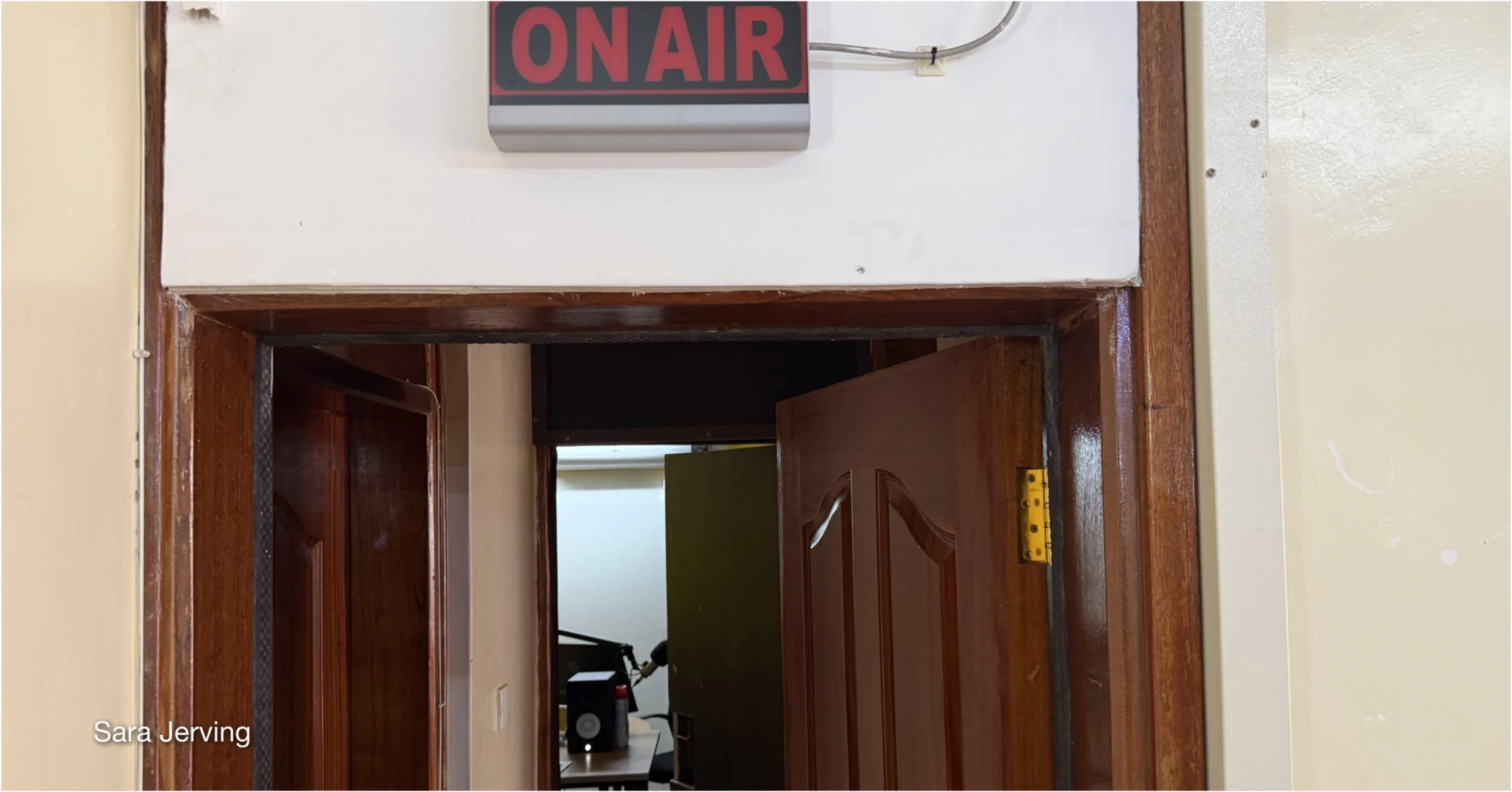
‘We lost their voices’: Sudan radio program falls silent after US aid cuts
Radio Tamazuj ran a radio program focused on the war in Sudan until the program was terminated by the Trump administration.
Photo credit: Sara Jerving
"A huge grab of power": Trump is defying Congress on foreign aid [ProPublica] ↳
Despite Congress passing a law directing the State Department to spend $9.4 billion on global health and over $5 billion on humanitarian aid, ProPublica reports that Trump officials have delayed obligating funds, labeled aid money "unallocated" to require OMB sign-off, and ignored congressional inquiries.
Can Africa survive the global aid squeeze? Yes, but it will take financial discipline [The Conversation] ↳
With official development assistance falling 23.1% in 2025 and projected to decline a further 5.8% in 2026, The Conversation argues that the pullback in U.S. and other Western aid should push African governments to build fiscal self-reliance through fairer domestic taxation, smarter debt use, and unified bargaining power rather than continued dependence on donor goodwill.
Germany's far right wants to DOGE its foreign aid agency [Politico] ↳
Germany's far-right AfD is exploiting a fraud scandal at development agency GIZ — where 24 Yemen-office employees were dismissed over alleged embezzlement estimated at tens of millions of euros — to push for abolishing the country's development ministry entirely, with party spokesperson Rocco Kever explicitly pointing to the Trump administration's gutting of USAID as an "interesting and courageous signal" for Germany to emulate.
Ebola recalls why the U.S. needs a foreign health service [Think Global Health] ↳
The U.S. has been able to lead the response to the May 2026 Bundibugyo Ebola outbreak in the DRC and Uganda only because CDC country offices preserved relationships with local health ministries through the dismantling of USAID and the U.S. exit from the WHO, Think Global Health reports.
Ebola outbreak response not hurt by US cuts: CDC director Jay Bhattacharya [The Hill] ↳
Acting CDC director Dr. Jay Bhattacharya publicly denied that the Trump administration's foreign aid cuts harmed the response to the ongoing Central African Ebola outbreak, saying he had seen no evidence the reductions affected the agency's ability to act — a claim that directly contradicts a recent House Oversight Committee report from Democrats citing the dismantling of USAID.
US–Central African Republic deportation agreement escalates attack on immigrants and puts lives at risk [Just Security] ↳
Just Security reports that the U.S. has reached a secretive agreement to deport third-country nationals to the Central African Republic, where they would face armed conflict, Russian Wagner-linked forces, and a collapsing health system now confronting Ebola risk.
Post-U.S. international democracy support: aspiration in search of substance [Carnegie Endowment for International Peace] ↳
A year after the Trump administration ended most U.S. democracy funding, Carnegie Endowment scholars find that no actor has stepped in to fill the void, with established Western donors largely maintaining but not expanding their commitments — and several, including France, Germany, the Netherlands, Sweden, and the UK, cutting democracy aid further.
When aid stops [Science] ↳
Writing in Science, researcher Axel Dreher examines the consequences of abruptly halting foreign aid, drawing on new empirical research showing that the Trump administration's blanket stop-work order for USAID has fueled a measurable increase in political violence in aid-dependent regions.
A year after USAID cuts, Philippine development groups struggle as anger lingers [South China Morning Post] ↳
A year after Washington froze and cut foreign aid, development workers in the Philippines say the damage continues, including with a coordinated misinformation campaign that recast USAID's publicly available funding records as evidence of U.S. interference, according to the South China Morning Post.
The impact of ending U.S. international media assistance [Carnegie Endowment for International Peace] ↳
A new Carnegie Endowment report finds that the termination of U.S. foreign assistance to independent media has gutted newsrooms, emboldened autocratic government crackdowns, and opened the door for Russian and Chinese influence to fill the vacuum.